How much a website really costs in 2026 (USD and Naira)
ContentsMenu
Every week I get a version of the same email.
"Hi, I want a website for my business. How much will it cost?"
I cannot answer this in one number. Anyone who can is either guessing or selling you a template. The honest answer takes a paragraph, and that paragraph is the post you are about to read.
Let me walk through the five tiers, what you actually pay for at each one, and how to tell which one fits you. I will give numbers in USD and in Naira because we work with both audiences.
What you are actually paying for
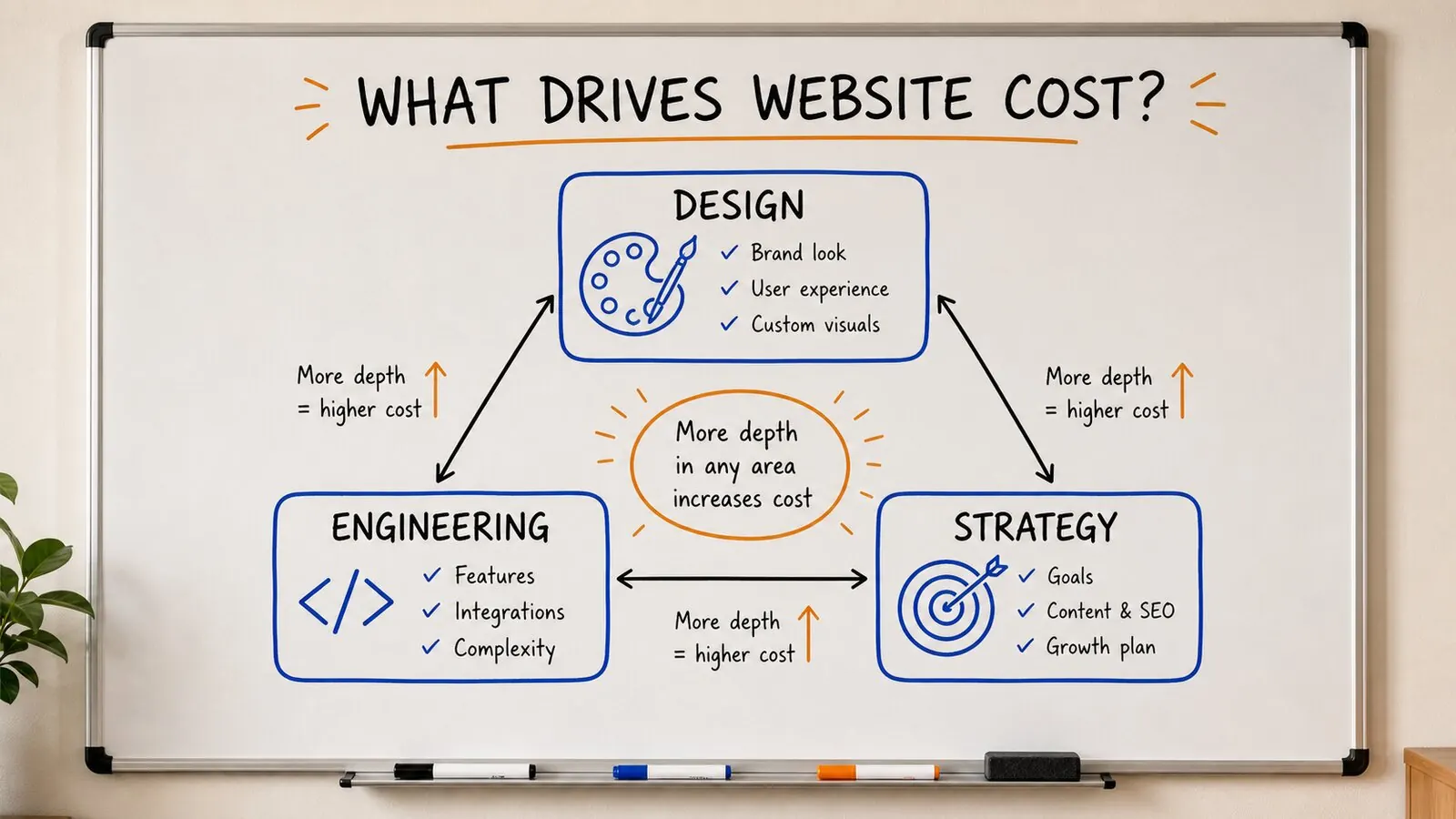
When you buy a website, you are paying for three things in different proportions at every tier.
One is the design. How original is it. How much was thought through about your specific brand. How custom are the components.
Two is the engineering. How fast does it load. How well does it work on phones. Will it break in six months when something on the internet changes. Is the code organized so the next person who touches it does not have to rewrite it.
Three is the strategy. Did anyone think about what the site is for, who lands on it, what action you want them to take. Or did they just put your logo on a template and call it done.
Cheap sites give you almost no strategy and a template design. Expensive sites give you all three.
You want to pay for the one you actually need. Not less. Not more.
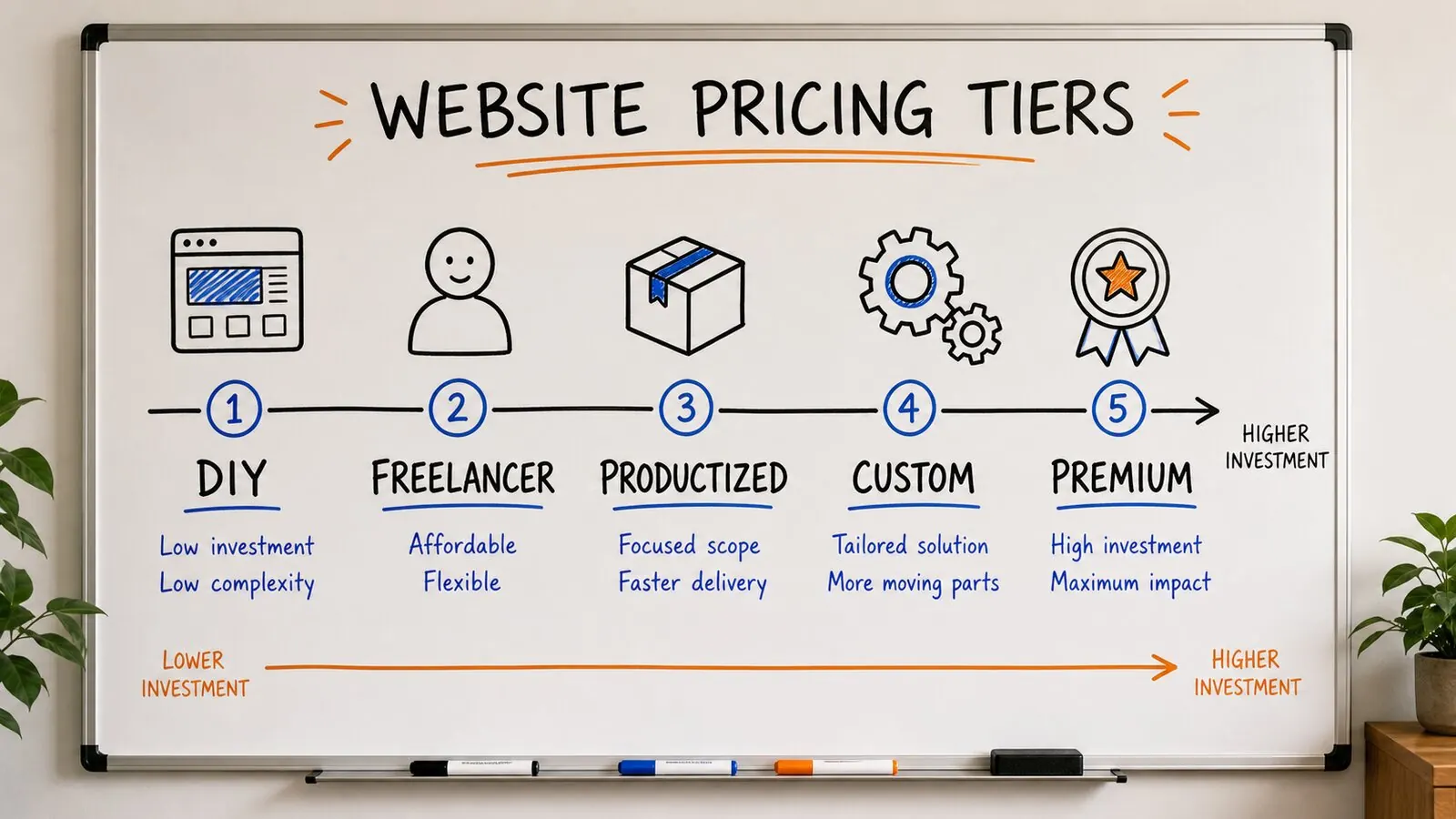
Tier one. The DIY tier ($0 to $200, or 0 to 300,000 Naira)
This is you on Wix, Squarespace, Carrd, or Webflow's free plan. You pick a template. You drop your photos in. You write the copy yourself. You spend a weekend on it.
It works. It will be live by Sunday night.
You pay for: A template. A subdomain like yourname.wix.com unless you upgrade.
You do not get: Anything custom. SEO that goes deep. Performance optimization. Mobile design that was thought through. The site looks like a thousand others.
This is fine if: You are testing whether you even need a website. You are a side hustle with three customers a month and you just need a place for people to see your phone number. You can iterate on it yourself.
This is not fine if: You are a real business that wants real growth from search. You are competing with other businesses in your category. You want to actually sell online.
Tier two. The freelancer tier ($500 to $2,500, or 500,000 to 3,500,000 Naira)
This is hiring someone on Upwork, Fiverr, or a referral from a friend. They build you a custom site, usually still on a template builder, sometimes from scratch in WordPress or Webflow.
The quality varies wildly. The good freelancers at this tier are better than mediocre agencies. The bad ones are worse than DIY.
You pay for: Someone else doing the work. Some custom design. Some thinking about how to make it not look like a template, even if it is one underneath.
You do not get: Strategy in most cases. Real performance optimization. A site that will still look fresh in two years. Support after launch unless you keep paying.
This is fine if: You have a clear vision and just need someone to execute it. You are willing to spend time vetting freelancers. You can be your own project manager.
This is not fine if: You need someone to think for you. You want a partner not a contractor. You need the site to do specific things like custom integrations, payment flows, or AI features.
Tier three. The productized agency tier ($2,000 to $10,000, or 250,000 to 1,200,000 Naira)
This is where you start to get real value if you pick the right people. Agencies at this tier sell productized packages. Landing pages, portfolio sites, ecommerce setups. Fixed scope, fixed price, fixed timeline.
This is where we live for our productized work. You pay a fair price, you know exactly what you get, you do not get surprised at the end with a bill that is double the quote.
You pay for: A custom design that fits your brand. Real engineering quality. Real thinking about SEO and conversion. A site that loads fast and works on phones. Support during the build. A team that has done this before so they do not make rookie mistakes on your project.
You do not get: A fully bespoke design system. A backend that scales to millions of users. Long term retainer support unless you add it.
This is fine if: You have a real business with real revenue and you want a real website that grows it. You want to know the price upfront. You do not want to learn how to manage a long agency engagement.
This is not fine if: You need something genuinely custom that does not fit into a productized box. You need an app or a SaaS platform, not a website.
For reference, our productized pricing sits in this tier. Landing pages from a couple of thousand dollars, portfolios from a bit more, ecommerce from around seven thousand five hundred. In Naira those start around 250,000 to 1,000,000 depending on the package.
Tier four. The custom agency tier ($10,000 to $50,000, or 5,000,000 to 30,000,000 Naira)
This is full custom work. SaaS platforms. AI integrations. Internal tools. Multi user systems. Complex ecommerce with vendor portals. Anything where a productized package does not fit.
You hire an agency. They scope the project with you over a week or two. They quote it. They build it over six to twelve weeks. They charge you in milestones.
You pay for: Everything. Custom design system. Custom backend. Real product thinking. A team that lives inside your project for two months. Engineering quality that holds up to scale. Documentation. Handoff. Support.
You do not get: Cheap. This is what good work costs when it is genuinely custom.
This is fine if: Your business depends on the thing you are building. Revenue is on the line. You need it done right the first time. You can sustain a two to three month build cycle and the cost.
This is not fine if: You just need a marketing site. You are paying for things you do not need.
Tier five. The premium boutique tier ($50,000 and up, or 30,000,000 Naira and up)
This is name brand design agencies. Pentagram, Instrument, Work and Co. You hire them not just because they are good but because you can tell people you hired them. The work is excellent. The price is excellent too.
You pay for: Reputation. Senior people on every part of the project. Original creative direction. Design that wins awards. A team that says no to obvious choices and finds better ones.
You do not get: Speed. Flexibility on price. A partner who will respond to a Slack message at 9pm.
This is fine if: You are a funded startup or a large enterprise. You want a design that becomes part of your brand story.
This is not fine if: You are a small business. You are paying for the brochure, not the product.
Why the same site can cost $1,000 or $50,000
Here is the thing nobody tells you. The same basic ecommerce site can be quoted at $1,000 by a freelancer in tier two or $40,000 by an agency in tier four. The deliverable looks similar on the surface. Both will have products, a cart, and a checkout.
The difference is everything you do not see. How fast it loads on a slow connection. Whether it handles 500 concurrent users or 5,000. Whether the inventory updates correctly when two people buy the last item at the same time. Whether the SEO is set up right. Whether the design will still look fresh in two years.
Some businesses need the cheap version. Some need the expensive one. Most need something in the middle.
How to know which tier you need
I will give you the cheat sheet.
If your business makes less than $30,000 a year and you just need to be findable online, start at tier one or tier two. Do not overspend.
If your business makes between $30,000 and $500,000 a year and you want real growth from your website, tier three is almost always where you should be. This is most small to medium businesses.
If your business makes more than $500,000 a year, or if the website is the product, you are in tier four. The work is genuinely custom and the cost is justified.
Tier five is for funded startups and brand projects. You will know if you are in this category. Most people are not.
What to do next
If you know what tier you need, get quotes from three providers in that tier. Compare what they include. Pick the one that explains their pricing clearly and treats you like a partner.
If you do not know what tier you need, book a call with us. We will tell you honestly which tier fits you and what to expect. We turn down projects that are below or above our tier. We will refer you out if you are not a fit.
The worst thing you can do is overspend on a website that should have been cheaper. The second worst is underspend on a website that needed to be a real piece of engineering. Knowing the tier first saves you both.
Want us to build something for you? Contact the team.